
Workplace Harassment : Tomorrow Has Already Arrived (1/3)
In 2025, the German Federal Ministry of Labour and Social Affairs (BMAS) published its Representative Study on workplace harassment in the Federal Republic of Germany, along with its accompanying Scientific Report. The findings of this study, conducted under the supervision of the Universities of Leipzig and Dresden, are intended to anchor in law a definition whose social usage remains imprecise. The concept frequently borrows from the vocabulary of physical domination to describe a phenomenon of psychological coercion or oppression.
According to the Universities' telephone survey, 6.5% of the working population—approximately three million people—reported having experienced or witnessed harassment, as defined by the authors, within the past six months. In their introduction, the authors describe workplace harassment as a form of interpersonal conflict “that goes far beyond the norm of ordinary conflicts”, encompassing a range of realities including unrightful criticism, bullying, prejudice, and ostracism by colleagues and/or superiors. To a large extent, it is the systemic nature, the temporal continuity, and the deliberate character of these disparate forms of psychological violence that make it possible to validate the concept objectively—something akin to a “hyper-conflict,” whose social and financial costs for both companies and society are rightly emphasized.
Presenting harassment as an “exaggerated conflict”, that is, an uncontrollable one, is not without significance. In the history of sociology, conflict has often been perceived as a disruptive or destabilizing phenomenon, implicitly negative in relation to an existing order. This perception generally calls for an economic reading (most notably through Realistic Conflict Theory), in line with experiments based on competition between individuals and emphasizing hedonistic interpretations of individual interests. In this sense, defining harassment as a "conflict" appears as a logical consequence of the primacy given to reward circuits, pain, and risk evaluation in studies of individual decision-making. This approach, clearly shaped by American sociology, has traditionally informed analyses of discrimination mechanisms (primarily gender- and ethnicity-based), while also profoundly influencing international diplomacy from the 1970s onward, reducing the world to something like a vast strategic game board. While the methodological motivations behind such experimental frameworks are understandable—science constantly seeks objective (and inexpensive) tools to measure reality—their semantic and ultimately legal consequences raise serious issues in this context.
Understanding workplace harassment as a form of conflict anchors its origin, on the one hand, in the broader fabric of past conflicts that have shaped Western societies: social conflicts, ethnic conflicts, religious conflicts, gender conflicts, and so on. Against this backdrop, interpretative shortcuts inevitably emerge. The study thus highlights, alongside the measurable costs of harassment, a focus on its hypothetical causes, beginning with discrimination which could have been treated separately, as is already the case in law. On the other hand, this limitation, which effectively essentializes the causes of harassment, also tends to essentialize its methods. If belonging to or being excluded from a group defines the social status that precedes conflict, then the conflict itself adopts the forms observed in interpersonal relations when groups are placed in competition for a seizable goal while their sense of rivalry is deliberately intensified for experimental purposes.
When the Universities of Dresden and Leipzig present the figure of 6.5%—which likely constitutes, alongside the observation of systemic risks, the central element of the Study—they ultimately fail to demonstrate sufficient curiosity: about the phenomenon itself, its evolution, future implications, and ties to modernity. For the 5,015 individuals contacted by telephone, the boundary of what does and does not constitute harassment was defined as follows:
- „The person felt unjustly criticized, bullyed, or publicly humiliated by colleagues and/or superiors and meets the frequency criterion (occurring ‘daily’ or ‘at least once a week’ over the past six months).“
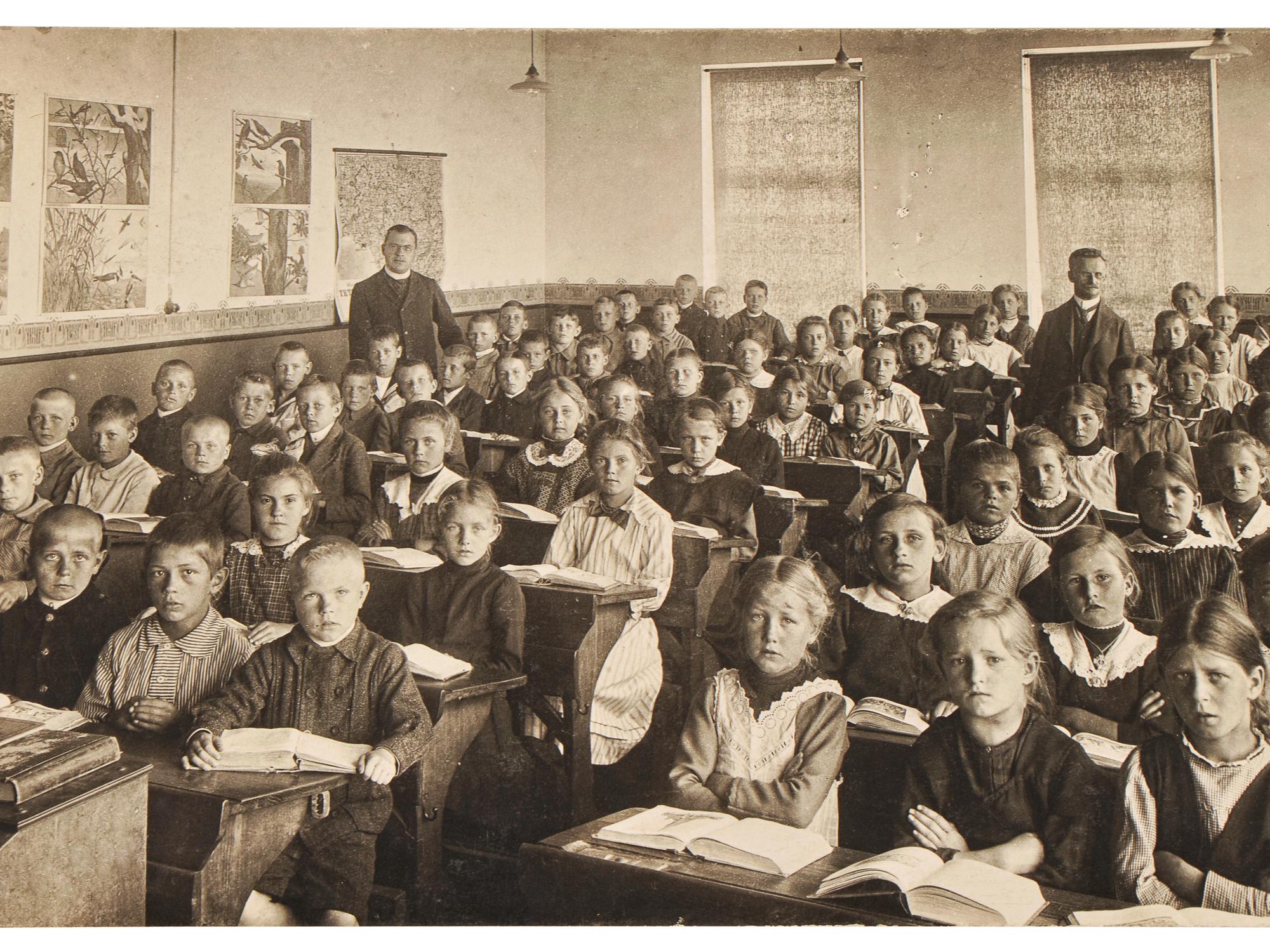
A first reaction might be one of relief, as these criteria seem to suggest that harassment in its complex contemporary forms evidently has no place within the Universities of Dresden or Leipzig. However, a comparison between the study published by the Ministry and the more extensive scientific report reveals a significant flattening of both the definition and the methods of harassment. Reframed as a "conflict" and therefore underlying reciprocity, but experienced by those concerned as an one-way prejudice, workplace harassment suddenly aligns with the common perception of bullying in school settings. In a sense, the workplace becomes a playground where interactions spiral out of control, leading to exclusion and mistreatment. The characterization of these conflicts as “exaggerated” reinforces a paternalistic conception: that of the schoolmaster who observes an unmanageable and unproductive situation that fails to meet the legitimate requirements of social order.
It is precisely this perspective that poses a problem for victims of workplace harassment. When they report such experiences to management, they are often met with reductive interpretations, denial, or outright dismissal. Phrases such as “We are not in kindergarten” tend to emerge, framing all interpersonal conflicts as irrelevant to the business context and therefore unworthy of managerial intervention. A warning or symbolic reprimand follows, and business resumes as usual—for both the company and the perpetrators. This reduction of the phenomenon amounts to an admission of powerlessness and misunderstanding; it is a prediction of inaction.
By contrast, the Scientific Report emphasizes the victims’ shared sense of being unable to speak, to have their situation acknowledged, analyzed, or ultimately defended—a state of defenselessness or helplessness. The researchers complement this definition with a more subjective, yet deeper, assessment of methods: "many respondents report experiences of exclusion, harassment, and false allegations. Others describe insults, threats, the assignment of tasks outside their area of expertise, or the failure to honor agreements. Some also emphasize the gradual, insidious nature of the process."
The deliberately simplified criteria of the telephone survey reveal a tendency toward flattening—likely intended to ensure that questions remain accessible and easily understood. Fortunately, a significant number of respondents exceed these constraints: those who move beyond the framework demonstrate an understanding that goes further than the criteria and express a distorted reality of harassment, far removed from the forms of bullying typically associated with childhood. Regrettably, it is not the scientific report that the Ministry primarily uses in its communication. This streamlined tool, aimed at legislators and businesses and often skimmed only superficially, is at high risk of being misunderstood, misjudged, and ultimately relegated—like so many other reports—to the bin. The issue of ministerial communication, and its overly simplistic treatment of social phenomena, is not new. The methods of harassment, meanwhile, have evolved.